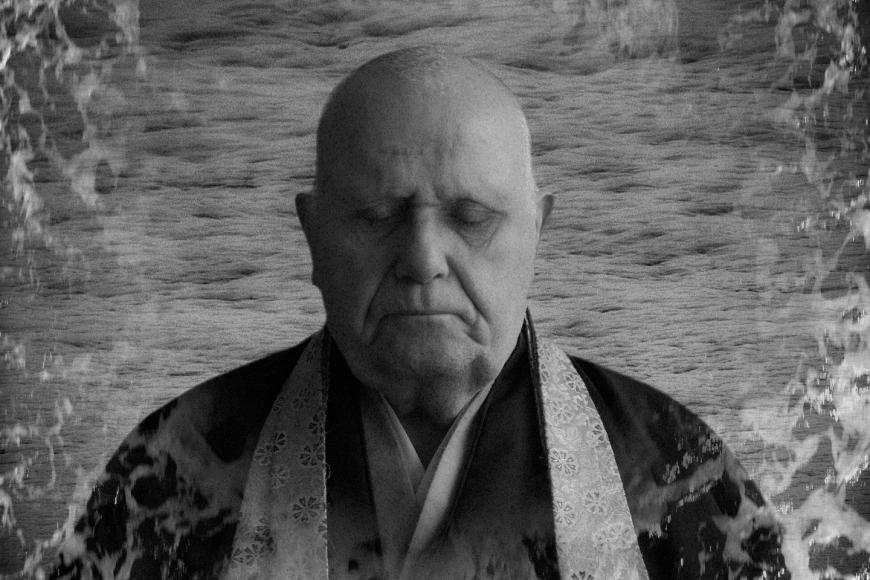
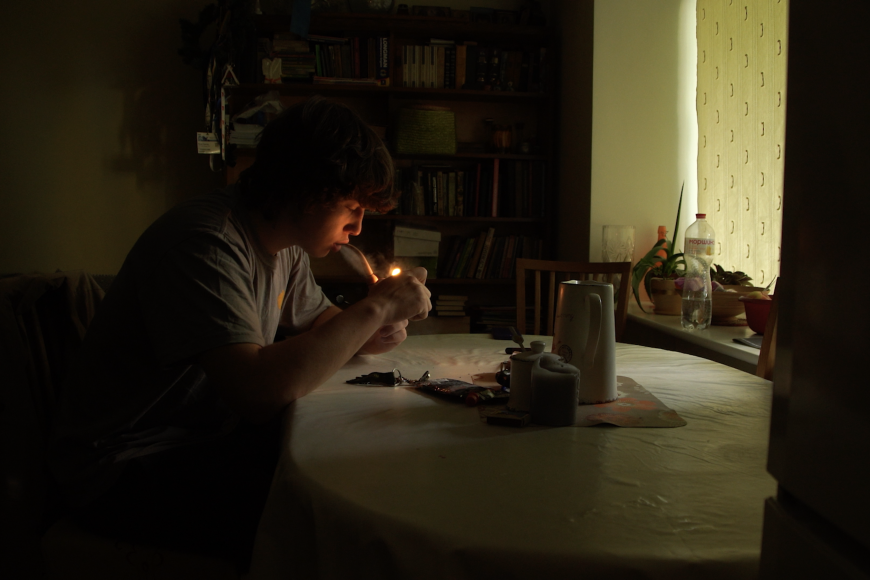
Eating together with chopsticks, forks, or cheese sandwiches: Heinz Toku-Zen Anneser and his students practice Buddhist rituals without pretension. In his study, which is as precisely measured as it is poetic, Thomas Köhling observes the daily routines of this small, quiet group in the German provinces and finds appealingly bizarre moments when Eastern religion and western culture overlap. The sky above the Velux window is the same as above Mount Fuji.
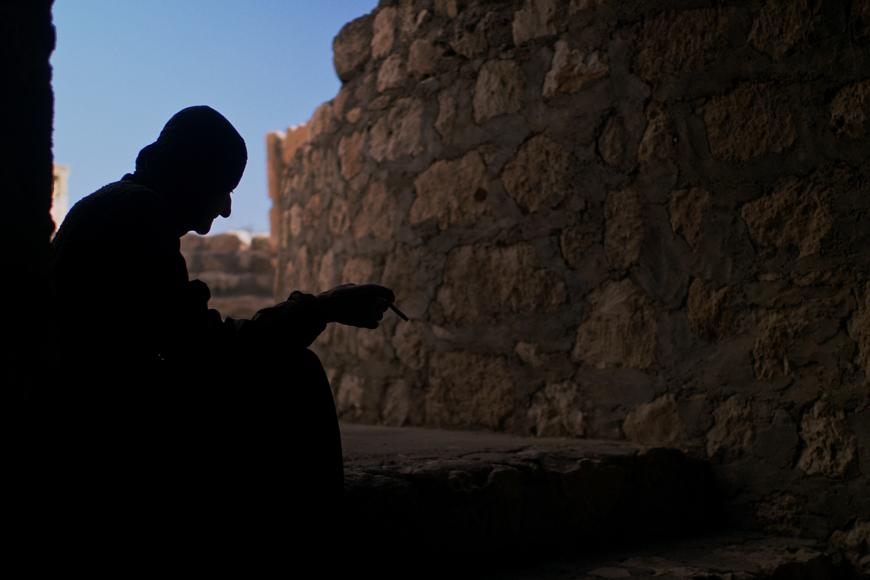
A Syrian Orthodox nun lives in an abandoned estate in south-eastern Turkey. Despite hostilities from the Muslim neighbourhood: she won’t be driven out.
In a dilapidated village in south-eastern Turkey, a Syrian Orthodox nun endures alone with her animals. However strong the hostility of her predominantly Muslim neighbourhood may be: she won’t be driven out, for she has sworn to protect the church and not to leave the sacred place. This quietly filmed observation of everyday life focuses on an isolated woman who carries the pain of a whole community inside her.
The population of the village was tortured and driven away in the 1990s. The nun Dayrayto came here only afterwards. Today she rarely receives visits from passing believers. She usually spends her days doing maintenance work on the church and taking care of the animals. Right now she is worried about her old dog. Has he been poisoned? What to make of the provocations and threats she talks about? Dayrayto is always vigilant, even when she’s resting. From her elevated dwelling she looks far across the landscape, registering every vehicle, however distant. But she is in no way distracted by the presence of the film crew. The unobtrusive camera follows the nun – not at every turn, but as a constant, protective companion as she endures on her “bastion”. Loneliness, worries and fear shape this sparse life. They made her suspicious, but also fearless.
The World Is a House and There Are Rules in This House
Felix Leffrank
A quite creative reflection of uncreative phases: A story-teller struggles with depression and writer’s block, under the watchful eyes of inner and outer demons.
The World Is a House and There Are Rules in This House
Die Welt ist ein Haus und es gibt Regeln in diesem Haus
Felix Leffrank
German Competition Short Film 2022
Animated Film
Germany
2022
13 minutes
German
Subtitles:
English
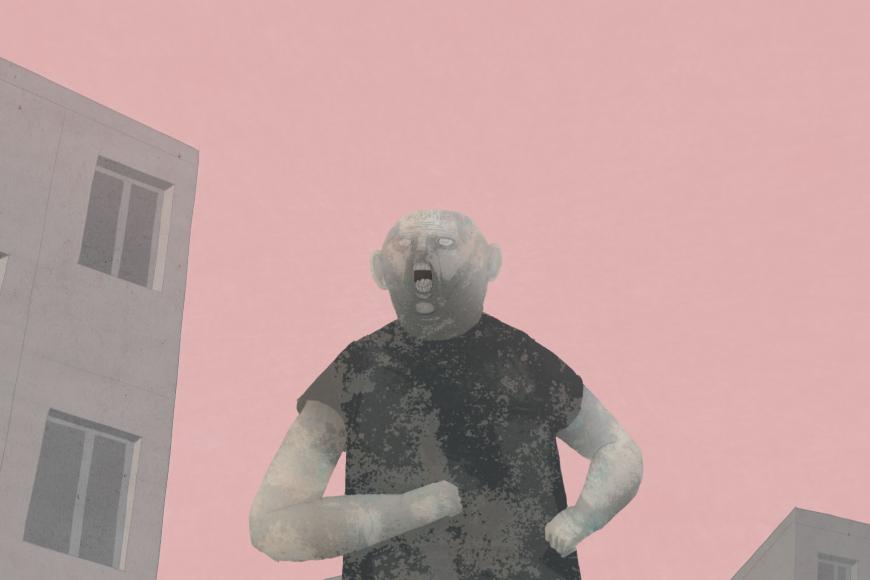
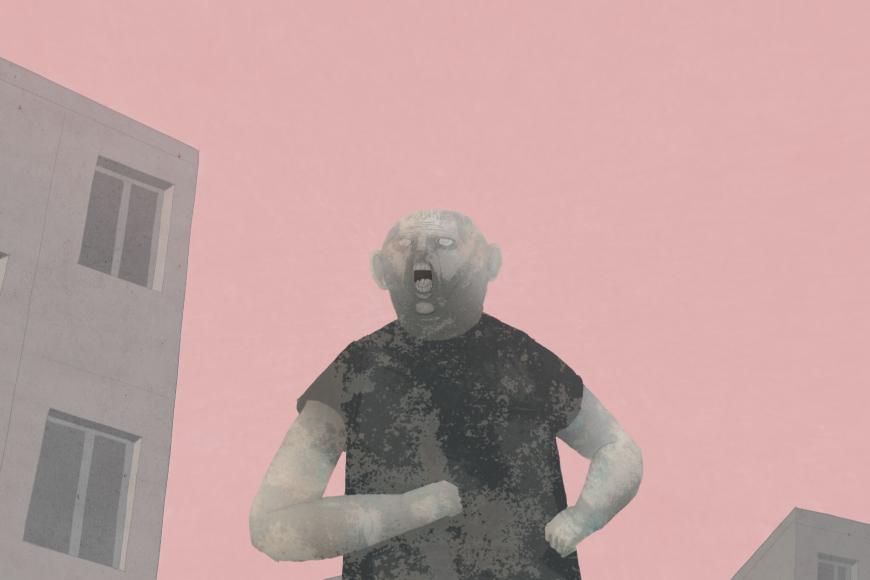
Felix Leffrank deals with the ups and downs of an artist’s life in colourful, computer-animated images. During his ordeal between depression, writer’s block, anger and urban loneliness, a story-teller is accompanied by three weird birds who sometimes appear as annoying neighbours, sometimes as inner demons. Jung, Freud and the psychologist Dr. Breuer in the shape of a grey cat promote self-reflection, but the most helpful thing is probably a beer with friends.
The small creature seems affectionate. Until it comes snarling around the corner. It sprints after you on short legs through the empty suburb. Unease starts to spread.
Small and cu… no, not cute. This knee-high creature seems somewhat affectionate and shy instead. Until it comes snarling around the corner, sprinting after you on short legs through the empty suburb. An uneasy lurking, a lurking unease starts to spread. With hand-drawn austerity, mean sounds and not-so-friendly characters, Malte Stein prepares the surgical instruments for some terrific mental cinema – for the protagonist and for all who watch him.
The small creature seems in need of love, until it comes snarling round the corner, chasing you on its short legs through the empty suburb. Unease starts to spread.
Small and cu… No, not cute. This knee-high creature seems shy and in need of love instead. Until it comes snarling round the corner, chasing you on its short legs through the empty suburb. An uncomfortable lurking feeling spreads. With sparse drawing, mean sound bites and not-so-friendly characters, Malte Stein lays out the surgical instruments for a head game.
The portrait of a Carpathian village: In encounters with three independent women, Maksym Melnyk documents rural life in the Ukrainian village of Stuzhytsya near the EU border.
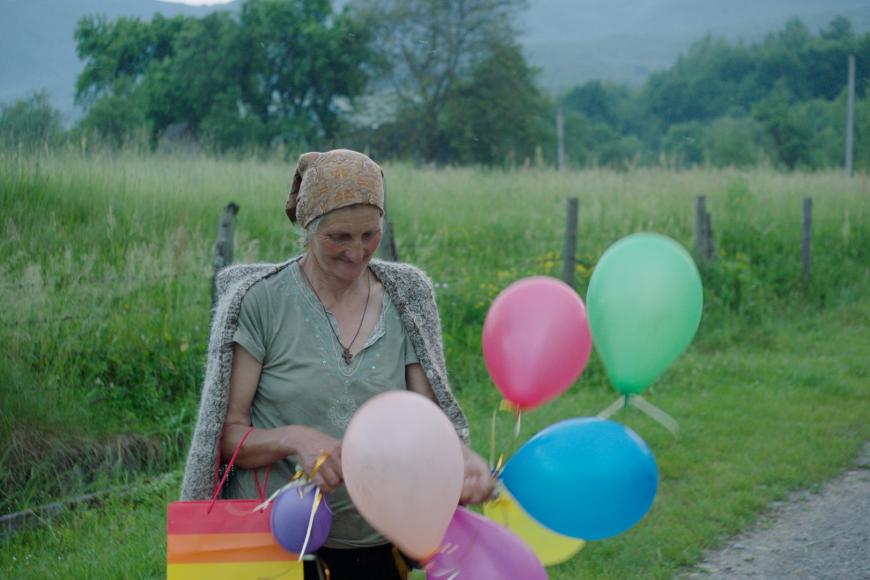
In a remote village, whose name roughly means “a cold place”, this film looks for warmth in encounters. The Ukrainian village of Stuzhytsya is situated in the Carpathian Mountains in the border triangle between Poland and Slovakia. The three elderly female protagonists – a farmer, a post office clerk and a biologist – are firmly rooted in a place where hardly any young people are left in 2019, the year of Zelensky’s election victory. Over time, the film crew also becomes, at least temporarily, a valued part of the village community.
Between horoscope readings at the post office, farm work with pitchforks and church blessings of cars in need of repair, Maksym Melnyk, also a native of Zakarpatska Oblast, establishes a growing intimacy with the three women. His documentary style arises from the interaction: In the beginning, he asks off camera questions like a reporter, but as he gets closer to the people, he enters the frame himself. Very few documentary filmmakers today see themselves as a “fly on the wall”. But gifting a pig to a protagonist in front of the camera or letting her cut the camerman’s hair? That’s rather unusual. Taking the single farmer Hanna, who treats Melnyk and his cinematographer Florian Baumgarten – whom she calls “the German” – like sons, as an example, the film portrays a rural lifestyle full of privation that seems to be in decline in the mountain region near the EU border.
Jan-Philipp Kohlmann
Credits
Director
Maksym Melnyk
Cinematographer
Florian Baumgarten, Meret Madörin
Editor
Jannik Eckenstaler
Producer
Maksym Melnyk, Andrea Wohlfeil
Sound
Roman Pogorzelski
Score
Maksym Melnyk
Winner of:
DEFA Sponsoring Prize,
Golden Dove (Audience Competition)
A virtuoso filmic reflection on automatisms in art and an encounter with Margaret Raspé on a Greek island, where the artist and filmmaker spends part of the year. Considered to be a pioneer of feminist German film, “I know where I am” is how she sums up her feeling on the island. Orientation in space, control and letting go are all central categories in her artistic practice.
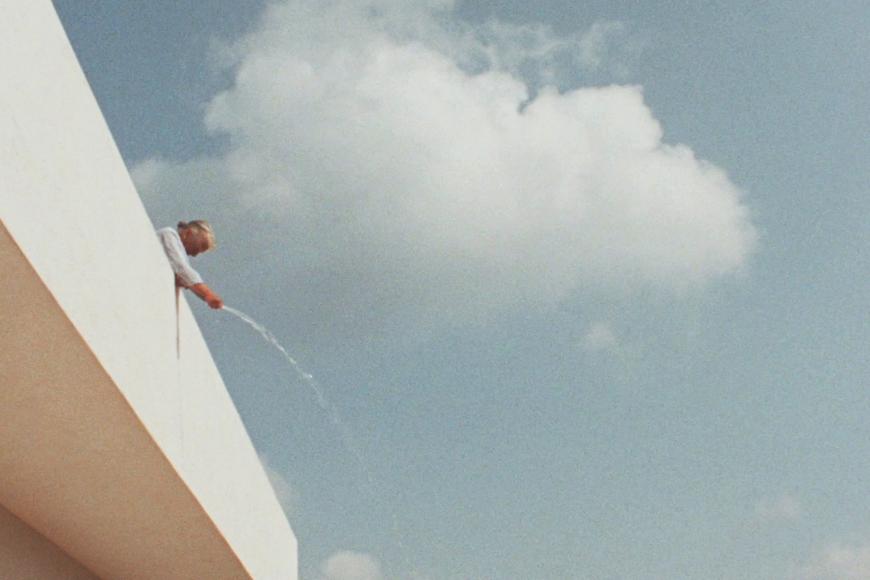
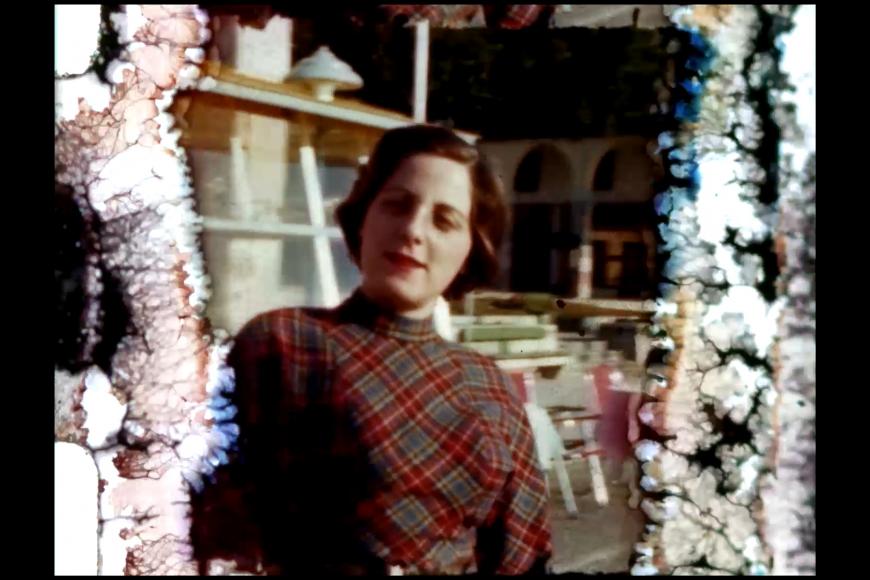
The company and details of its machinery are presented. A montage from two different sources on the title, one of them tinted fragments, the other well-preserved black-and-white footage.
A tinted nitrate fragment of the company film “A. Gutberlet & Co., Leipzig-Mölkau, Spezialfabrik für Falzmaschinen und Faden-Buchheftmaschinen, gegründet 1901“ (specialist in the manufacture of folding machines and thread book stitching machines, established 1901) was an exceptional find. It could be restored in its original colour tones by analogue methods in 2024 and then digitised. Combined with the dupe negative of another version, it now offers insights into the factory halls and the work on the machines.
Competition for the Audience Award Short Film 2020
Animated Film
Germany
2019
4 minutes
English,
German
Subtitles:
English
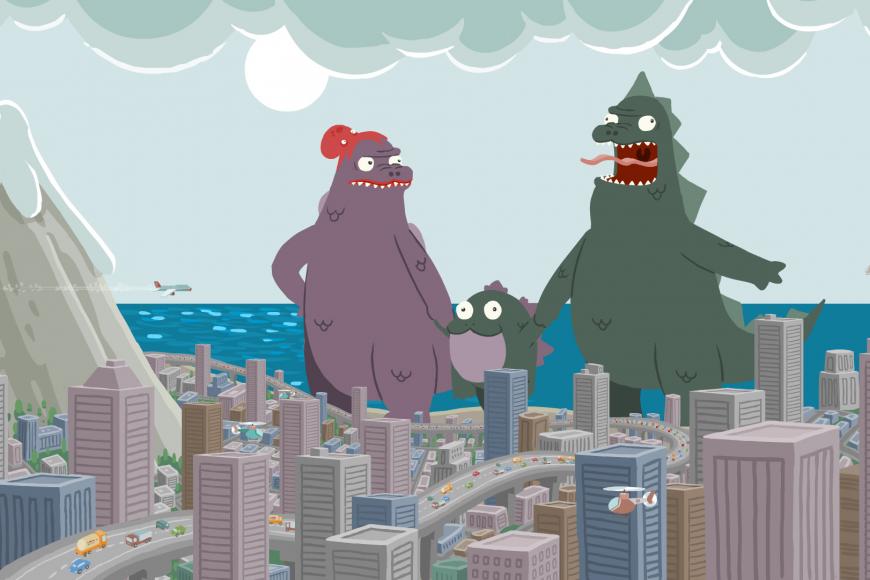
A cosy family picnic at the place they have been visiting since the Cretaceous period is what Mom, Dad and Go Zilla want. But first the big city that has annoyingly sprung up there must be flattened. In the father’s opinion, the performance of his offspring unfortunately leaves a lot to be desired: Too dreamy and still sucking on a pacifier, the little one just doesn’t wreak enough havoc. It’s an entertaining story in the almost normal everyday life of a family.
Touching insights into the daily workings of the youth welfare system. Five boys in a rural residential group who long for a home. And the people who try to give it to them.
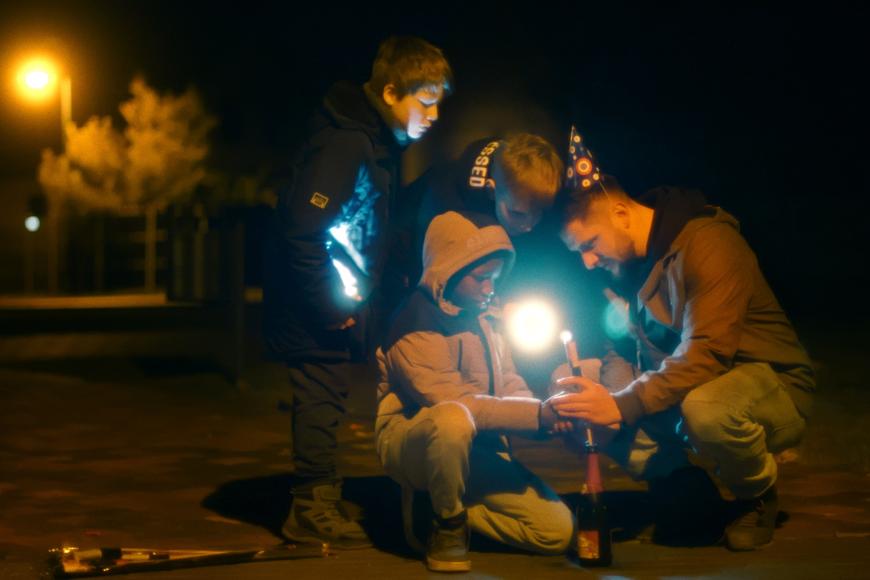
When parents can no longer fulfil their duty of care, the children’s world often falls apart. Nothing stays as it was. Suddenly it is no longer mum or dad who are in charge but the youth welfare system. Daniel Abma followed a youth housing group in a rural area over several years, showing professional educators who want to give five boys between the ages of seven and fourteen what they need most urgently, day by day: security, orientation, a home. The documentary focus is not on the children but on those who take the parents’ place. They sometimes remind us of Don Quixote tilting at the windmills, for there is a diffusion of responsibility between school, youth welfare services, and absent mothers and fathers. Words fail when adults do not keep appointments, when those in charge capitulate in the face of racist bullying and propose some “time out” – for the bullied boy – in a psychiatric facility. It would be easy to denounce these mechanisms, but that is not the point Daniel Abma wants to make. His observation, both emphatic and reserved, looks questioningly into the gaps in the system – with those who are in danger of falling through and those who try to fill them with affection. He makes us suspect that the answer is not to close all the system’s gaps. It is people who are there for other people and take responsibility.
Luc-Carolin Ziemann
Credits
Director
Daniel Abma
Script
Daniel Abma
Cinematographer
Johannes Praus
Editor
Jana Dugnus
Producer
Britta Strampe, Laura Klippel
Sound
Alexandra Praet, Christoph Walter
Sound Design
Alexandra Praet, Roman Pogorzelski
Score
Henning Fuchs
German Distributor
Camino Film
Broadcaster
Rolf Bergmann, Dagmar Mielke
Commissioning Editor
Rolf Bergmann, Dagmar Mielke
Funder
Medienboard Berlin-Brandenburg GmbH, Deutscher Filmförderfond, BKM - Die Beauftragte der Bundesregierung für Kultur und Medien, FFA Filmförderungsanstalt
Nominated for:
VER.DI Prize for Solidarity, Humanity and Fairness,
DEFA Sponsoring Prize,
Gedanken Aufschluss Prize
Winner of:
Gedanken Aufschluss Prize,
ver.di Prize for Solidarity, Humanity and Fairness
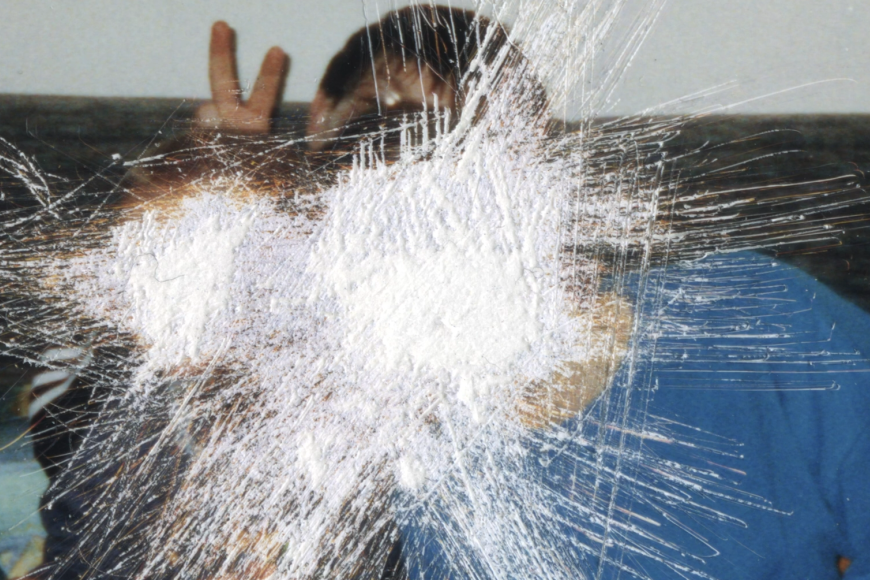
Family photos. A woman’s face is scratched out or overpainted. Fragmentary descriptions of the mother’s sudden outbursts are added. Approaching the trauma of an experience of violence.
We all know photos with painted-over or cut-out faces. The repeatedly inserted hand that works on family pictures with pens and other utensils seems like a refrain. The attempts at eradication are audible. They are a dissonance transferred to the body. Scratch, distort, remove. Usually a woman’s head. Even if the narrator speaks in the third person, even if the hand may not be his hand, these could be his own experiences. The fragmentary descriptions revolve around a mother who beats and tortures her children. It is a childhood in permanent fear. How do you deal with the memories and scars in adulthood? Can the experience be put into words at all? Why do you feel strangely alienated from your siblings who suffered the same? David Kind’s essayistic approach to the trauma of violence is questioning. The doors of the title are opened with extreme caution.
What does it mean to lead a nomadic life in Germany today? This film explores the potentials of a vagabond existence in a world of settlement permits and garden fences.
What does it mean to live a nomadic life in Germany today? How do people see you when to keep moving is more important to you than possessions and social status? What are the prejudices faced by people who work outside the 40-hours-per-week regular job model and want to be fulfilled? To get some answers to these questions, Anna Friedrich walks part of the way with four women who prefer travelling to settling. The journeywoman Magdalena loves the intensity of permanent new beginnings, but travelling also keeps her from working in her dream job as a qualified farmer. As an activist, Johanna lives in her refurbished van, which she has parked at various spots for years, and frequently takes part in political protests like forest occupations. Elwera, a former tightrope artist, and her granddaughter Ghislaine belong to the Yenish community who move from market to market, continuing a generations-old tradition. Director Anna Friedrich uses the conversations to shed light on her own longing for being on the road, but also for a critical reflection of the settled world in the eyes of these women. The potentials of a nomadic existence thus emerge – and how they are in danger of wasting away between settlement permits and garden fences. Stepping to the other side of the fence opens possibilities.
Luc-Carolin Ziemann
Credits
Director
Anna Friedrich
Cinematographer
Robin Angst, Ray Peter Maletzki, Leonard Schmidt, Anna Friedrich
Editor
Federico Neri, Miro Schawalder
Producer
Stephan Helmut Beier, Ray Peter Maletzki
Co-Producer
Thomas Beyer, Andrea Wohlfeil, Filmuniversität Babelsberg KONRAD WOLF
Sound
Alejandro Weyler, Anna Friedrich, Elisa Malter
Sound Design
Irma Heinig
Score
Max van Dusen
Broadcaster
Thomas Beyer
Nominated for:
VER.DI Prize for Solidarity, Humanity and Fairness,
DEFA Sponsoring Prize
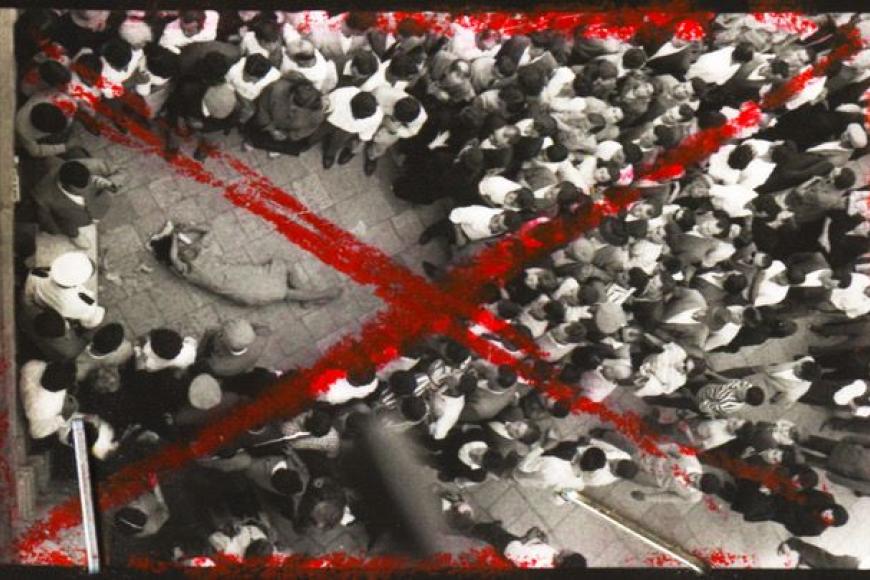
Apulia, 1959: ecstatic dancing in a chapel. These women are said to have been bitten by a spider. Today, “tarantism” has been tamed as folklore and become a tourist attraction.
Apulia, 1959: Women in white dresses dance ecstatically in a small chapel. They jump around, roll on the ground, some even climb the altar. They are said to have been bitten by a spider. Their dancing mania requires a ritual exorcism with music. Pictures like these inspired Italian anthropologists to travel to southern Italy. Equipped with tape recorders, film and photo cameras, they tracked down the phenomenon of tarantism. This essayistic documentary follows the wealth of multi-media archive material produced on this research trip. It brings out the voices of the affected women, who turn out to be experts of their own performances. A special relationship developed between the scientist Annabella Rossi and the “tarantata” Michela Margiotta, with their correspondence at the centre of the film. Even today, these images of female frenzy are disturbing, revealing the loss of control of husbands, families, science and the church. In today’s Apulia, the film discovers living forms of tarantism, tamed as folklore, a tourist attraction. There are new poisons that have infested the system. They, too, must be danced out.
Jan Künemund
Credits
Director
Anja Dreschke, Michaela Schäuble
Script
Anja Dreschke, Michaela Schäuble
Cinematographer
Anja Dreschke
Editor
Anja Dreschke
Producer
Anja Dreschke, Michaela Schäuble
Sound
Birgit Minichmayr
Sound Design
Carlo Peters
Score
Carlo Peters
Nominated for:
DEFA Sponsoring Prize,
VER.DI Prize for Solidarity, Humanity and Fairness
On 9 February 2022, four friends in Kyiv discuss the situation: There are 120,000 Russian soldiers at the borders – what will happen? An equally historical and private moment.
In the evening of 9 February 2022, four young men sit around a table in Kyiv. The friends are discussing the situation: 120,000 Russian soldiers are stationed right at the Ukrainian border. What is going to happen? In “The Birds Are Silent”, director and cinematographer Leo Dzhyshyashvili captures an equally private and historical moment. What is striking is the clarity with which Andriy, Olexandr, Ivan and Sasha assess the consequences of the imminent attack: Potential decisions about their own future are mixed with concerns about relatives and the bewilderment at being thrown into a situation that provokes both helplessness and disgust. But there is a glimmer of hope – perhaps the imagined horror scenarios are nothing but a waste of energy? Cut. Some of the debaters have become soldiers; one has barricaded himself in the bathroom with a narrow mattress and a meal. Within eight minutes, Dzhyshyashvili has tied together a before and after that make you shudder.
Cinematic genealogy: A grandson sets out to document his grandparents’ boundless love but upon closer inspection of the myth is unable to overlook the family rifts.
A young man meets a young woman and both fall for each other. A house is built, children are born, the fairy tale story of boundless love takes its course. A grandson sets out to explore the myth of his grandparents’ romance and tries to honour his deceased grandfather on film, assisted by all the surviving relatives. Not an easy undertaking when things may not have been exactly as the family tradition would have it …
In his search Rocco Di Mento unearths old 8mm home movies, an unpublished novel, various love letters and a whole host of long-suppressed feelings. It’s hardly surprising that this mixture begins to develop a dynamic of its own. Suddenly the issue is no longer only the search for the love of one’s life but also the questions of what holds people together above and beyond their relationship status and degree of kinship and how forgiveness is possible even though you have long since lost faith in it. An ingeniously constructed family constellation full of Italian temperament, in which tension, emotion and truthfulness are inextricably linked. Because: “Even if you leave you will always be part of your family.”
Luc-Carolin Ziemann
Credits
Director
Rocco Di Mento
Cinematographer
Sabine Panossian
Editor
Antonella Sarubbi, Valentina Cicogna, Rocco Di Mento
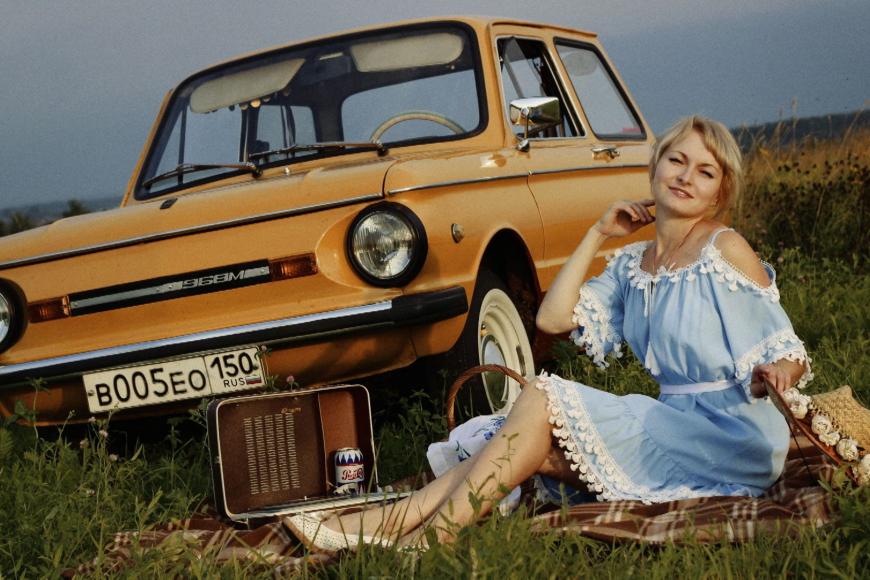
A cheerfully edited collection of auto biographies from socialist production in seemingly carefree times – when the motorized vehicle was still allowed to be a status symbol.
A nostalgic trip into a past when buying a car constituted a lifetime’s work – especially for those Europeans who had a maximum of two handful of brands at their disposal. This cheerfully edited collection of auto biographies from socialist production evokes seemingly carefree times when the motorized vehicle was allowed to be simply a status symbol: free from ideological turf wars revolving around the climate crisis and mobility diets.
From Russia via Bulgaria and the Czech Republic to Germany and Norway, love stories between humans and Trabi, Moskvitch and Volga are captured on film. We meet protagonists who are fond of their beloved piece of tin, then or now, or have even amassed a considerable collection. There’s a couple who met and fell in love at a retro car exhibition and still drive the same model today. We meet a sexton who passes on his official car after 32 years of use. We make the acquaintance of a pin-up who always poses in front of vintage cars from the East. They all have a soft spot for these rickety rust buckets, because even though the products of the socialist car industry were usually slow, chunky, tedious to drive and to repair, they were all regarded as showpieces of a successful life. And there was one in almost every family: coveted, long longed-for, assiduously polished.
Lina Dinkla
Credits
Director
Georgi Bogdanov, Boris Missirkov
Script
Boris Missirkov, Georgi Bogdanov
Cinematographer
Boris Missirkov, Georgi Bogdanov
Editor
Emil Granicharov, Jacob Thuessen, Georgi Tenev
Producer
Martichka Bozhilova
Co-Producer
Tina Leeb, Miljenka Čogelja, Dana Budisavljević, Jiří Konečný, Sigrid Jonsson Dyekjær, Sascha Beier, Simone Baumann





![Filmstill Fa. Gutberlet & Co. [Ausschnitt]](https://www.dok-leipzig.de/sites/default/files/styles/stepped_teaser_/public/fiona/films/stills/94a765f0-53ce-4935-bc20-309db0abbb7f.jpg?h=346bc062&itok=5n_TqdCp)



![Filmstill Fa. Gutberlet & Co. [Ausschnitt]](https://www.dok-leipzig.de/sites/default/files/styles/film_stills_full_content_view/public/fiona/films/stills/94a765f0-53ce-4935-bc20-309db0abbb7f.jpg?h=346bc062&itok=0mNa-FNw)


