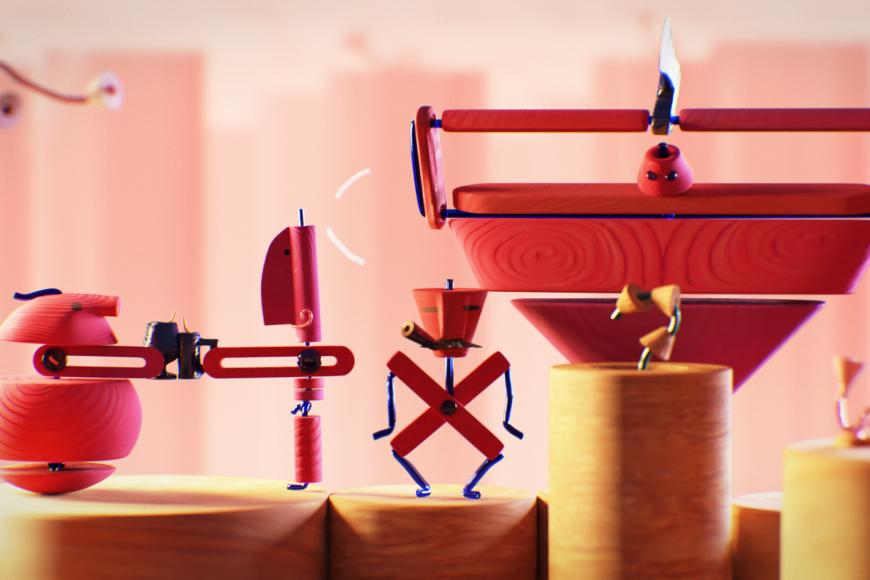
A group of figures made of beads and building blocks move to the same rhythm – until the little green figure is to wear beads, too. Everything gets out of sync.
The little green figure runs up the mountain to the other figures made of beads and small building blocks. All move to the same rhythm, right, left, up, down. One day the little green figure, too, is supposed to decorate itself with beads. But this throws everything out of sync. The gears come to a standstill.
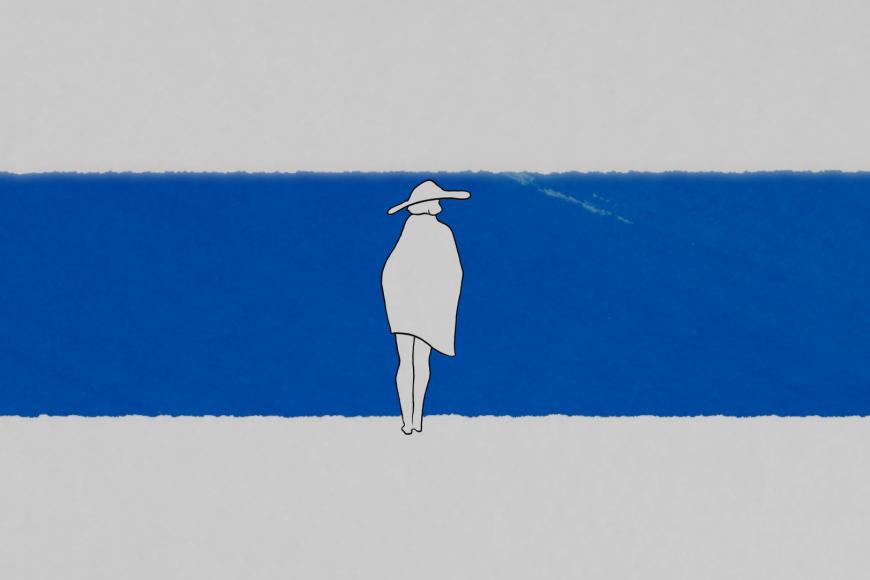
A trip to the beach expands to a family observation over two generations. This captivating minimalist stretching exercise does not need much: black and white and the deep blue of the sea.
The sea on whose shore Weronika Szyma has set her film is a dense, pulsating blue. The beach and the family who are staying there, meanwhile, are limited to delicate black and white line drawings. Their minimalism makes the blue stand out all the more enchantingly: Sometimes represented as a horizontal strip that promises freedom but also fuels insecurity. Sometimes sloshing diagonally across the screen, swallowing up the image completely for a brief moment and marking a caesura. And there are quite a number of caesuras, because the seven film minutes span the story of several generations.
At one point the father disappears and the mother and her almost grown-up daughter are left to fend for themselves. They learn to comprehend the loss, support each other, turn gestures of distance into gestures of affection. Until the confidence grows to start all over again. The only thing that does not change here is the blue of the sea.
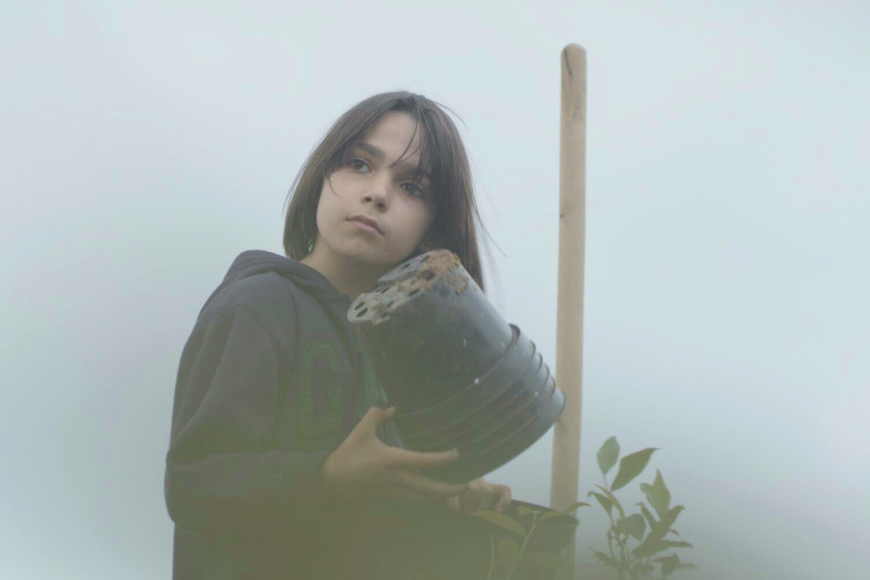
A family are struggling with their blueberry harvest in the mountains of Georgia. At the same time, current crisis spots bring back memories of the Russo-Georgian War – and worries about their own children’s future.
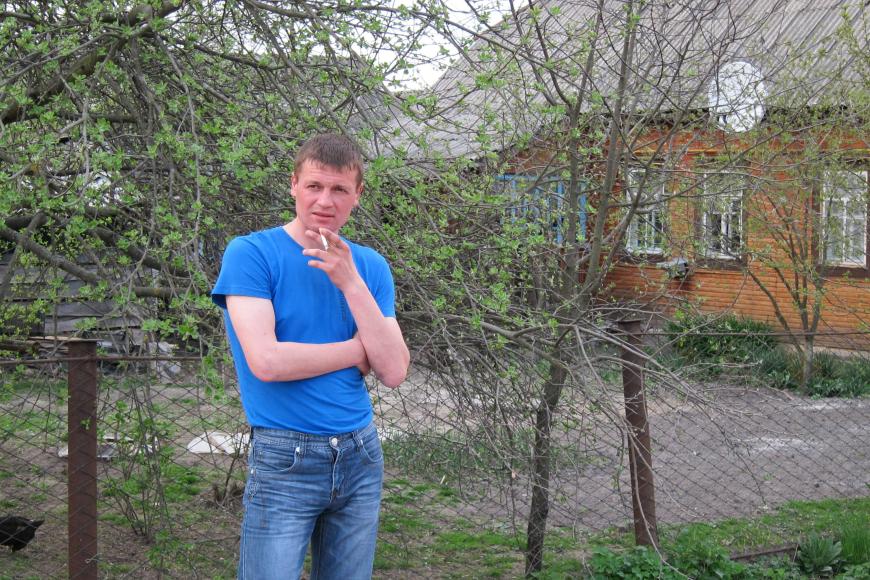
In the north of Georgia, twelve kilometres from the Russian-influenced region of Abkhazia, a family are realising their dream. Under the optimistic motto “Plant the Future,” the Georgian government has launched a funding programme that enabled the people in this state which has been shaken by wars and crises for years to make a fresh start on their own farmland. With this support Soso, a retired engineer, took the big step in 2021 with his wife and two young sons and began growing blueberries. Director Elene Mikaberidze and a dynamic camera follow the bold endeavour of the greenhorn farmers as they settle into their unfamiliar new life month by month. In the evenings, they pass the time with games and conversations, while the television is on in the background: images of a Ukraine under attack, news of the escalation in the Middle East remind the adults of the Russo-Georgian War sixteen years ago. Soso, the head of the family, contemplates his homeland in the midst of an escalating global situation. What dreams will still find a place there? Mother Nino is worried about her children’s future. She wants them to have the freedom to go their own way, to travel abroad and leave Georgia behind. Whether these ideas correspond with Soso’s remains to be seen.
Em Johrden
Credits
Director
Elene Mikaberidze
Script
Elene Mikaberidze
Cinematographer
Patrick Wendt
Editor
Yannick Leroy, Phillipe Boucq
Producer
Elene Margvelashvili
Co-Producer
Baptiste Brunner, Isabelle Truc
Sound
Elene Mikaberidze
Sound Design
Marco Pascal
Broadcaster
Al Jazeera Documentary, Tënk, RTBF, Georgian Public Broadcaster
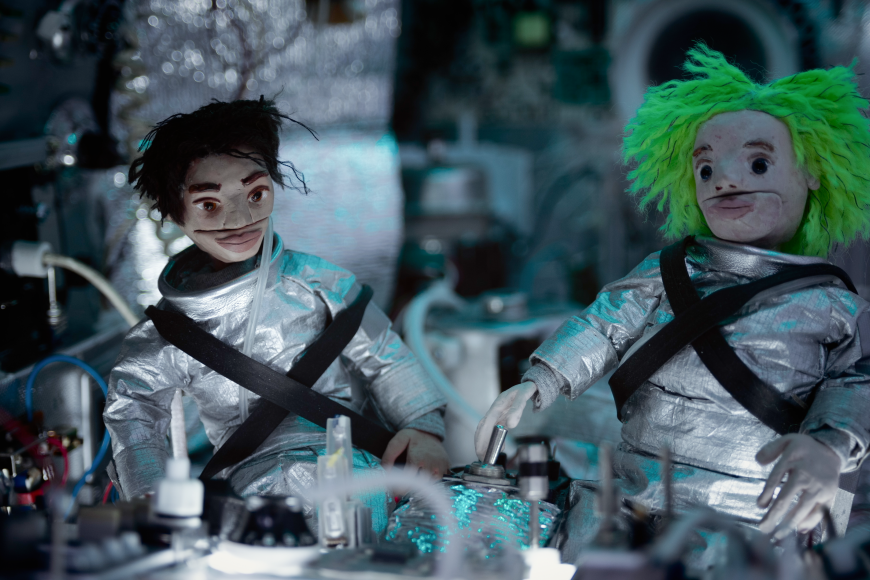
A wild stop motion animadoc trip through the glittering dreams of an astronaut who gathers all his courage to show himself to the world as he is. Set course for star date LGBTQAI+.
A marvellously wild stop motion animadoc trip to unknown worlds, in which 18-year-old astronaut Fatu sets himself a challenge that’s as nerve-racking to him as a lunar expedition. He wants to go shopping at the supermarket – for the first time as he sees himself: in full glam make-up. How will his family with their Kosovar roots react to these new coordinates? Will his self-perception and the others’ perception clash? Set course for star date LGBTQAI+.
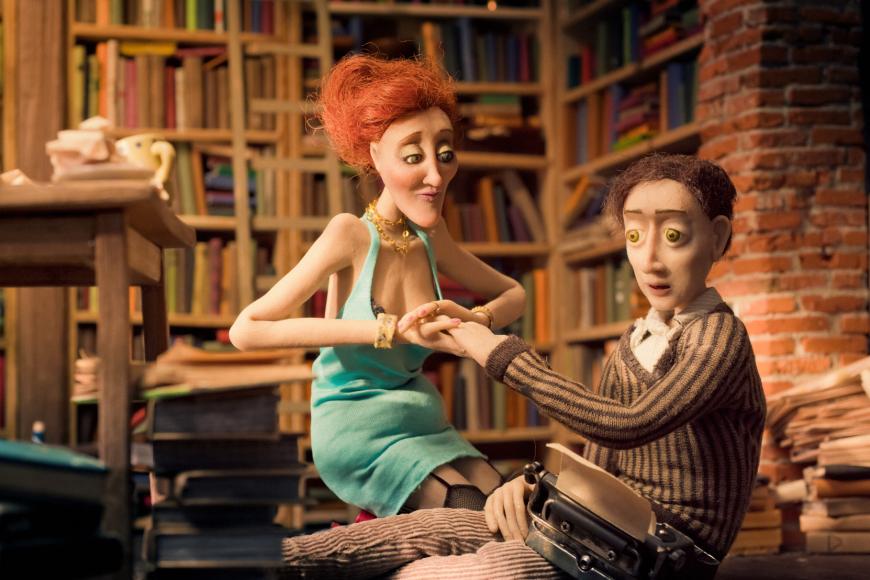
Filip and Tereza have little in common except for the wall between their apartments. Loosely based on Gorky, Špela Čadež makes the puppets dance: a pas de deux of neighbouring lonelinesses.
Filip lives next to Tereza, he is a blocked writer, she is an ageing prostitute. They have little in common, except for the wall separating their apartments. One day Tereza asks him to write a letter to her fiancé. But that’s only the beginning … Špela Čadež makes the puppets dance, loosely based on Maxim Gorky: a pas de deux of neighbouring lonelinesses.
In 2014, Russian separatists destroyed homes and families in Toretsk in eastern Ukraine. War followed coal in leaving deep marks on the landscape – and became normality.
Toretsk in eastern Ukraine is marked by the decline of the coal industry: wasteland, rubble, scrap metal. In 2014, Russian separatists brought war into the region, destroying homes and families, including Nastya’s. The girl and her friends, all on the brink of adulthood, accept the decaying outskirts, gone to seed in the face of threat and depression, as normal. Taras Tomenko observes their small danced or sung escapes, their moments of obliviousness, sometimes their tears.
Sylvia Görke
Credits
Director
Taras Tomenko
Cinematographer
Misha Lubarskyi
Editor
Viktor Malyarenko
Producer
Volodymyr Filippov, Andriy Suyarko, Alla Ovsyannikova
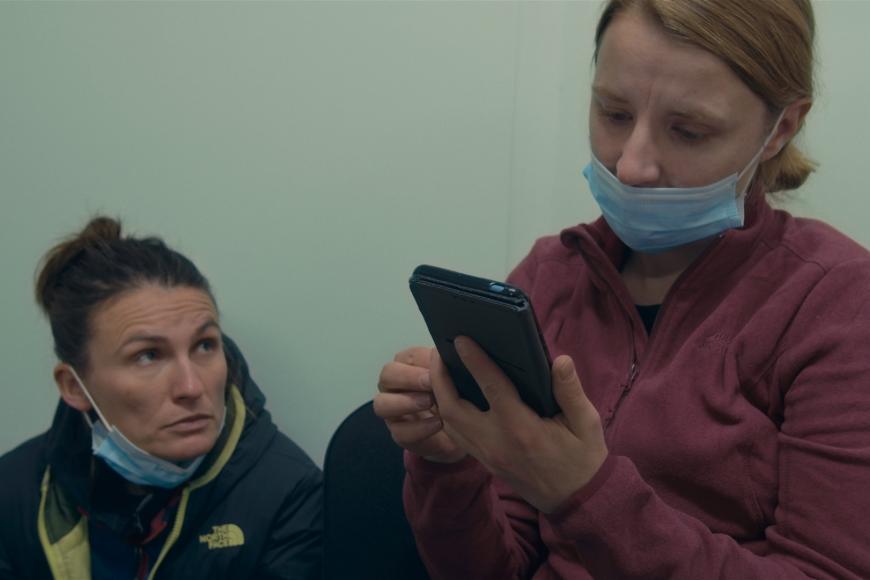
If you want to enter the EU, you will come up against borders. So do those who want to help. A stirring film about the “jungle” between Belarus and Poland which turned into a human trap in the winter of 2021.
In November 2021, people tried to enter the EU via Belarus and Poland, but the route turned out to be a death trap. All access points to the border region were blocked in order not to create an escape corridor. Men, women and children were stuck in no man’s land – in the middle of winter, in the middle of the forest, for weeks. The film follows Polish activists on their mission. They learn that humanitarian aid, just like the refugees themselves, comes up against borders.
Luc-Carolin Ziemann
Credits
Director
Jonathan Brunner
Cinematographer
Marie Scholjegerdes
Editor
Samuel Albert
Producer
Tristan Schneider
Sound
Marc Lehnert
Score
Frederic Hellmann
Animation
Fee Fuchs
Winner of:
Silver Dove (German Competition Short Film)
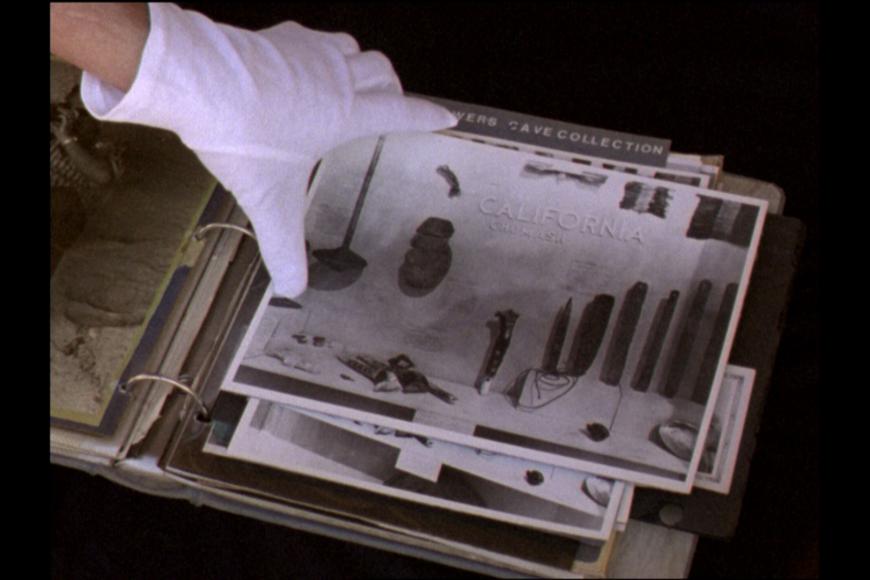
This graceful, protean short explores the past and present of Bower’s Cave in California, where a large collection of Chumash Indian religious artefacts were found in 1886.
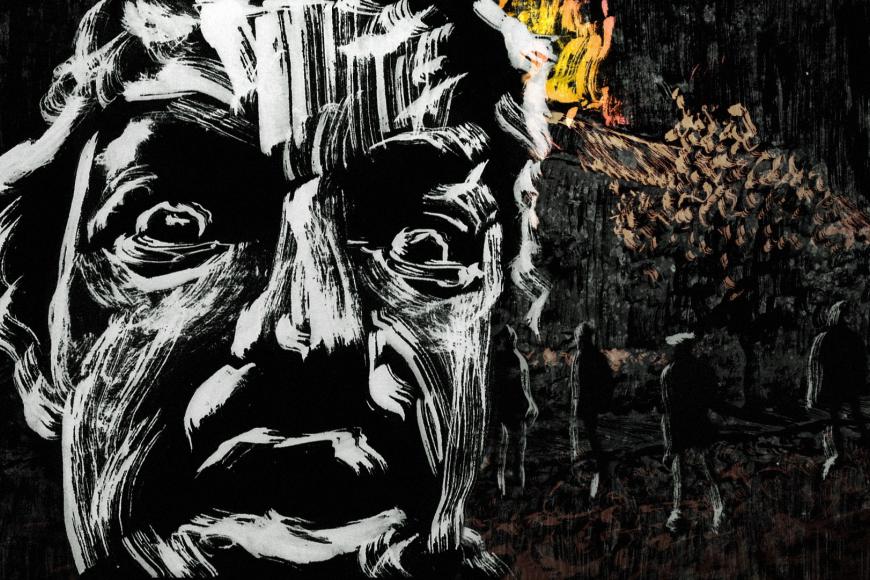
In 1885, two boys came across a large collection of Chumash Indian religious artefacts in a cave in California’s San Martin Mountains. Later named Bowers Cave, it is now located on a landfill site. Lee Lynch and Lee Anne Schmitt’s graceful, protean short braids together a panoply of different texts and images to unearth the different layers to this all-too American story and allow its wider implications to resonate: photos of museum exhibits given their Chumashan names in voice-over, historical quotes that move across views of contemporary industrial activity, Indigenous figures rendered as bright plastic toys, the mouth of the cave and the markings carved into its walls.
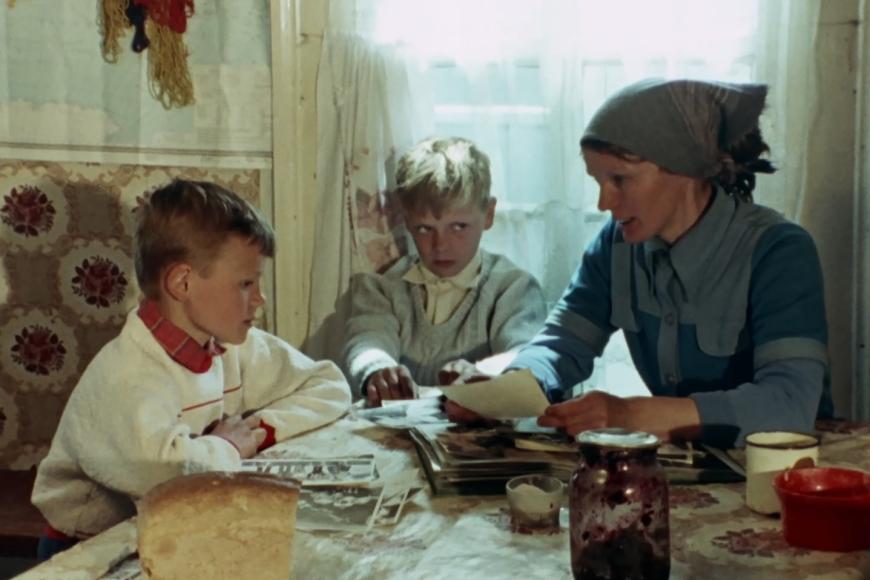
The emotionally shattering portrait of the unfulfilled childhood of a Ukrainian boy caught between the post-catastrophe Chernobyl and the state of emergency in Slovenia.
The Chernobyl nuclear accident in 1986 also resulted in a humanitarian catastrophe. Many were affected, including eight-year-old Anatoly Rizov. In “Boy, Bloodbrother of Death,” Maja Weiss draws an emotionally shattering portrait of the unfulfilled childhood of a boy caught between the apocalyptic scenario his Ukrainian hometown became and – utterly ironic – the no less threatening state of emergency in Slovenia. During the summer holidays, Anatoly is supposed to recover there from the frightening conditions at home. But in the fight for independence from Yugoslavia, the place of refuge becomes a crisis area, too.
Simon Popek
Credits
Director
Maja Weiss
Script
Gorazd Perko
Cinematographer
Bojan Kastelic
Editor
Sonja Peklenk
Producer
RTV, UL AGRFT - Akademija za gledališče, radio, film in televizijo
Chernobyl, 25 years after the nuclear disaster. What has become of Anatoly’s country, of his life and dreams? What happened to the relief funds? Many questions remain unanswered.
Chernobyl, 25 years later. Maja Weiss meets the boy, Anatoli, as a young man. What has happened in the meantime – between the nuclear disaster and the prospect of another tragedy? Where have all the international relief funds disappeared, and where did the millions intended for the reconstruction of the decaying sarcophagus of the Chernobyl nuclear power plant seep away? Where is my life taking me? What legacy will I leave to my son? These are just some of the questions that Ukrainian Anatoly Rizov, now grown up and twenty years after the first documentary portrait about his fate shaken by crises and wars, tries to answer.
2015, the rejection of refugees by the residents of Middle German Tröglitz escalates in violence. Drawings and 3D animations make tangible how hatred corrodes the life of the community.
Tröglitz in 2015: The mayor organises a shelter for refugees. He and his family become homeless themselves, because many residents believe that strangers do not belong in their Middle German home. With an interview with the mayor on the soundtrack, the drawings and 3D animations make tangible how the immense hatred corrodes the fabric of the community and tears the people apart.
A look back at a GDR childhood by the sea, where boundaries and freedoms were always close to each other: a poetic autobiography, condensed in hundreds of watercolours.
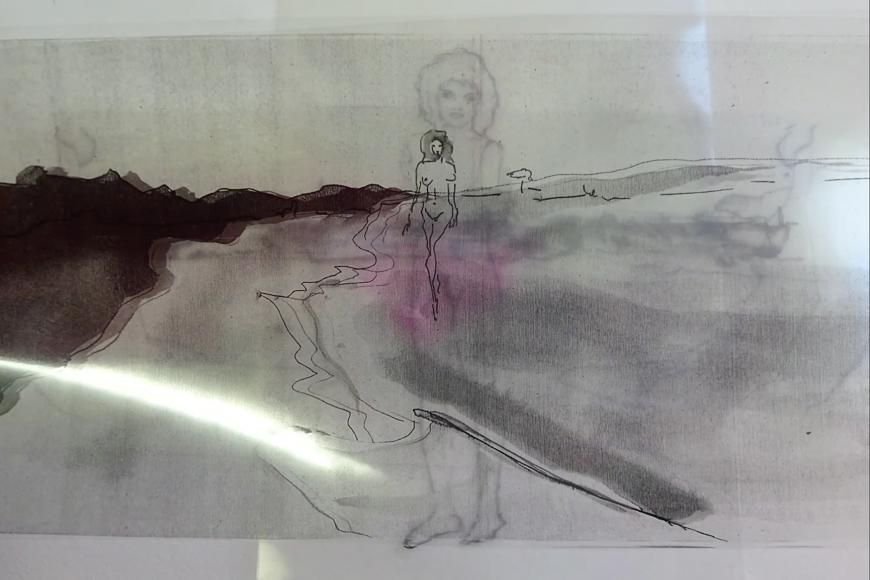
Siren-like singing and rhythmic light reflections segue into a lyrical text and sketched silhouettes of coastlines and waves. Delicate lines and soft shadings on superimposed transparent foils form many-layered networks of shapes and structures. What is offscreen creeps into the frame through reflections and blends in with the visual design of the film. Then and now meet and merge into a poetic narrative about a childhood in Stralsund, at a time when the city was still part of the GDR. A fenced-in, circumscribed childhood, framed by nocturnal floodlights, the bawling of drunk sailors and the crumbling plaster of facades and walls gone grey. The narrator manages to leave this oppressive fortress behind, but she can never escape completely. The memories that have settled like grey dust on her interior will stay with her forever.
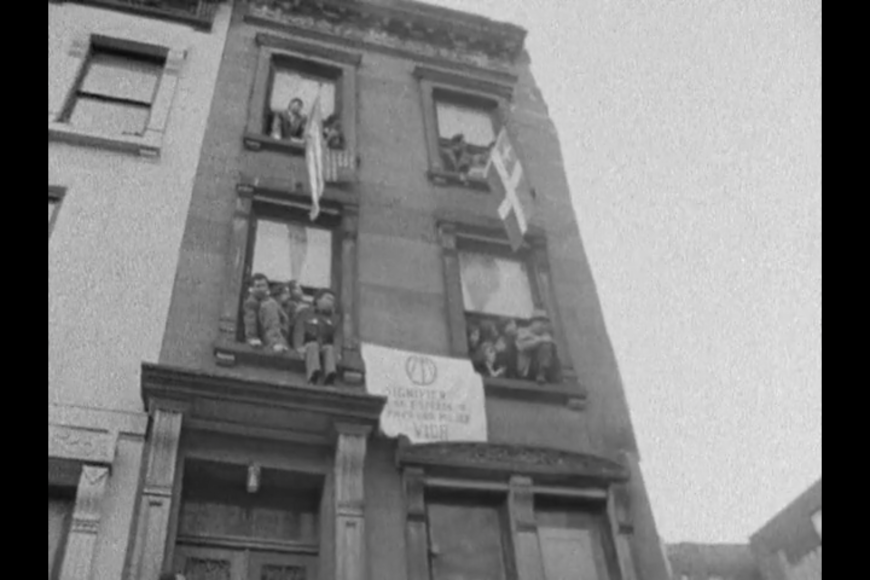
Self-organized solidarity communities: The New York squatter movement fights to prevent the poorer population sections from being driven out of the lucrative areas in Manhattan.
“Why should I move? I was born here.” While a senseless war is waged in Vietnam and million-dollar rockets are shot to the moon, there is not enough decent housing in New York – and worse, the poor are being forcibly evicted from their homes, says an angry protagonist of this activist film which introduces the New York squatter movement. Latin Americans in particular are forced to leave the lucrative Manhattan housing market, but the protesters do not accept this without putting up a fight. “Break & Enter” is a spontaneous and encouraging film document about self-organised communities based on solidarity.
An outcry, a free-roaming paper dog and enduring pain: This experimental stop motion animation takes us into the emotional depths of a personal story of loss.
In only ninety seconds Marcus Grysczok tells a touching personal story of loss and takes us to great emotional depths. Tune in: an electronically distorted outcry. The protagonist talks to himself and to someone who no longer lives in this world, but all the more in his heart. He looks for a way out of this state of powerlessness, assuming a stranger’s role, a free-roaming paper dog that runs between real shelves and across tables, races past people on black-and-white photographs and everyday objects, chases himself on a plate rim. The images convey a feeling of home – a home for memory and for life. Tune out? As soon as the dog stops, reality puts an end to this restless racket and brings the awareness of enduring loss. Poetic in language and design, the film formulates a moving but clear-eyed farewell to a brother.
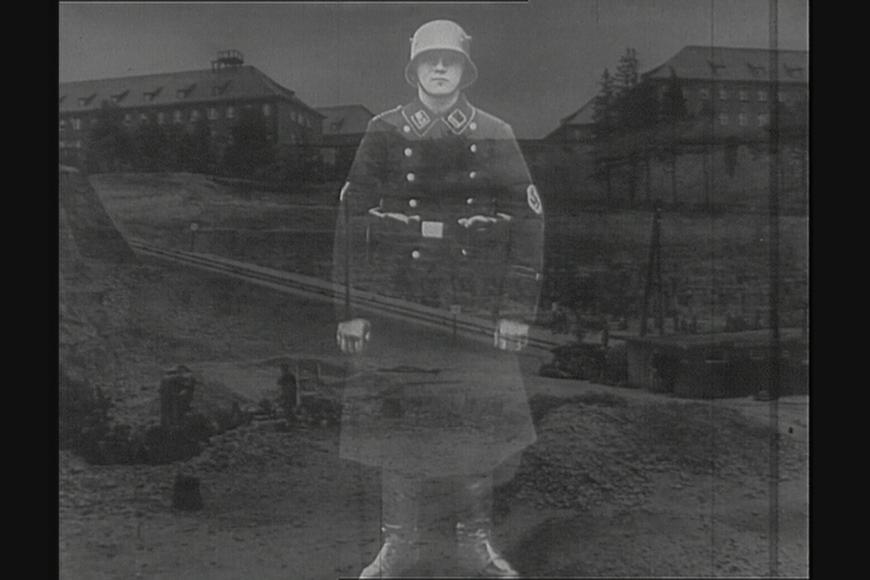
The Buchenwald Memorial was the first national memorial of the GDR. From 1961 to 1975, every memorial tour began with this introductory film, in which the Jewish victims are barely mentioned.
The inauguration of the “National Buchenwald Memorial”, the first national memorial of the GDR, took place in 1958. The monumental site was also meant to demonstrate the state-supporting importance of a selective culture of remembrance, commemorating the communist resistance fighters – and omitting the fact that the graves were mainly filled with Jewish victims. In 1961, DEFA completed this “introductory film”, commissioned by the Buchenwald committee, which talks about Goethe, Schiller, Thälmann, but only very marginally about Jews. Every visitor’s memorial tour started with this until 1975. Its scriptwriter and production manager was the playwright Heiner Müller, a fact that was not known until 2004.
Books Are Bread and Human Beings Need Them [excerpt]
Peter Rocha
Modern sound, image composition and montage show the spectrum of the 1982 Book Fair, combined with colour and black-and-white footage of its venue, Leipzig.
Books Are Bread and Human Beings Need Them [excerpt]
Bücher sind Brot, dessen der Mensch bedarf [Ausschnitt]
Peter Rocha
Matinee Saxon State Archive 2025
Documentary Film
GDR
1982
6 minutes
German
Subtitles:
None
A quote by literary figure Johannes R. Becher, first Minister of Culture of the GDR, supplies the title of this film about the 1982 International Book Art Exhibition. Sensitively composed images embed the IBA in the hustle and bustle of Leipzig. Old and new shots of the city, in black and white and in colour, take us to some of the 82 national booths of this book art contest, accompanied by atmospheric piano music.





![Filmstill Bücher sind Brot, dessen der Mensch bedarf [Ausschnitt]](https://www.dok-leipzig.de/sites/default/files/styles/stepped_teaser_/public/fiona/films/stills/d7847ba8-aac8-4ab3-a3ef-ce887332b289.jpg?h=346bc062&itok=HAInWMvT)


![Filmstill Bücher sind Brot, dessen der Mensch bedarf [Ausschnitt]](https://www.dok-leipzig.de/sites/default/files/styles/film_stills_full_content_view/public/fiona/films/stills/d7847ba8-aac8-4ab3-a3ef-ce887332b289.jpg?h=346bc062&itok=vskuGuM1)