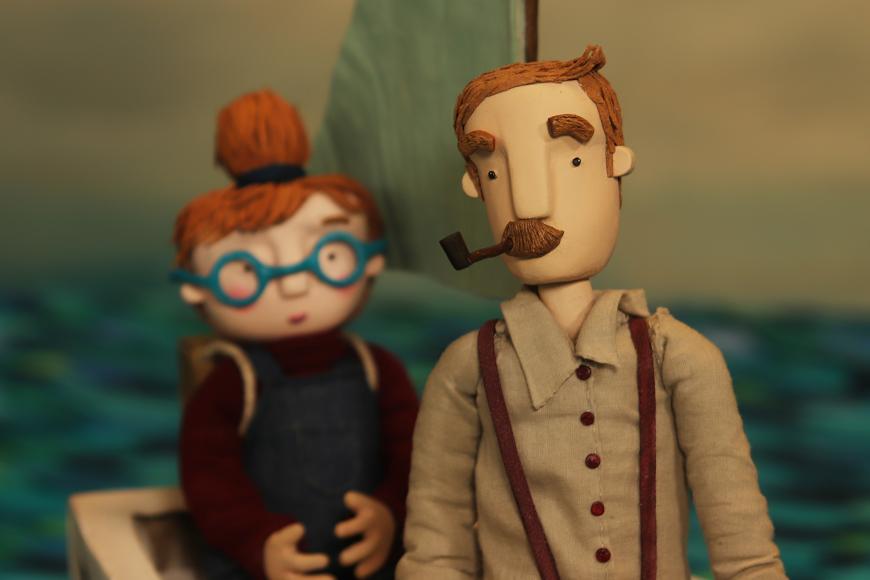
The day begins for father and daughter. They climb beyond their treehouse, glide over and under water, cross blooming landscapes, travel through the air and fly on into space. By ship, bicycle, balloon or on foot. A film about travelling, collecting souvenirs in passing and the question of what’s left at the end of a life.
Soviet Troops in Prague and Budapest (Panorama, 29.7.1968)
anonymous
A curious look at the socialist reform experiment in Prague, with sceptical undertones: Will everything end like it did in Hungary in 1956? Soviet tanks are already being deployed along the border of the ČSSR.
Soviet Troops in Prague and Budapest (Panorama, 29.7.1968)
Sowjetische Truppen in Prag und Budapest (Panorama, 29.7.1968)
anonymous
Retrospective 2023
Documentary Film
FRG
1968
15 minutes
German
Subtitles:
None
Prague in July 1968. The West German television magazine Panorama reports on the situation in the ČSSR, drawing parallels to the developments in Budapest in 1956. Curious and sceptical at the same time, the feature explores the possibilities of an independent reform movement, but also soberly concludes that the Soviet Union will not tolerate this. The tanks are already waiting at the border.
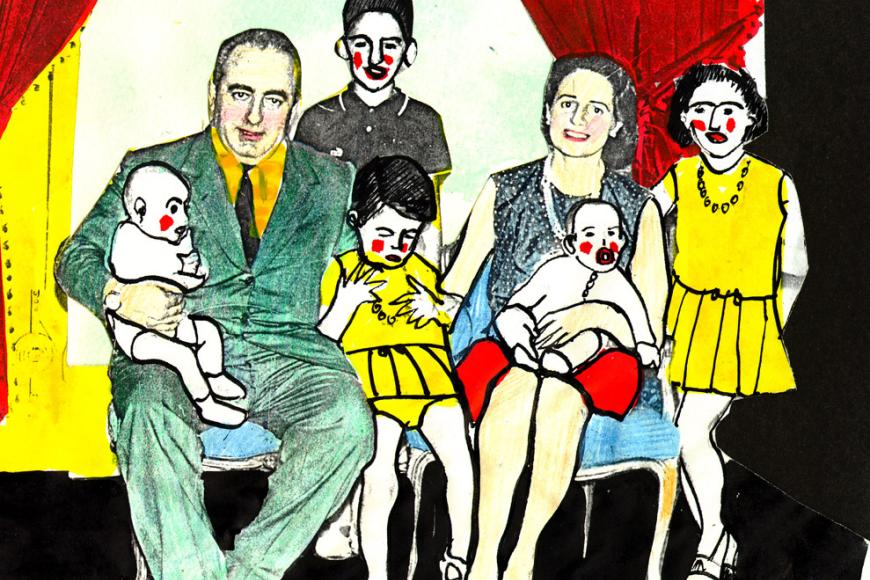
Isabel Herguera herself welcomes us in the title sequence of this autobiographical short film and gives us a brief glimpse behind the scenes of her work as an artist. Right after that, we join her on a fast-paced trip through the part of her family history that begins with the birth of her brothers in 1965 and ends with the death of General Franco in 1975.
A gaudily coloured twisty slide takes us into emotional shallows. A squeaky voice complains about its inadequacies. It belongs to an animated figure which serves as a catch bowl for a soul that’s not doing well. Its creator has pieced it together, but something holistic does not pop out of the demiurgic mush. Tulapop Saenjaroen uncovers the beginnings of Thai animation and takes a critical look at the future promise of media placebos.
“Communism is Soviet power plus the electrification of the whole country,” Lenin said. The biggest country on earth, presented in stupendous images intended to awe and amaze.
Saint Petersburg as the cradle of the 1917 October Revolution, Moscow as the birthplace of the Soviet Union in 1922: According to Lenin’s dictum “Communism is Soviet power plus the electrification of the whole country,” the mastery of the forces of nature and the exploitation of natural resources are demonstrated in impressive images – emphasising the independence and fraternity of all Soviet Republics.
A wild ironization and deconstruction of the old Soviet pathos of the victory of technical progress – like the accelerated pulse just before a heart attack.
Overpaintings and scratchings in scenes from the Russian science fiction film “Silver Heads” by Yevgeniy Yufit. Considering that this work is already an outrageous deconstruction of the old Soviet pathos of the inevitable victory of scientific and technical progress, “Stakes” must be regarded as its drug-fuelled exaggeration into the unsurpassable.
Ralph Eue
Credits
Director
Boris Kazakov
Script
Boris Kazakov
Cinematographer
Boris Kazakov
Editor
Boris Kazakov
Producer
Saint Petersburg International Film Festival of Festivals
In August 1990, the still-GDR sends 425 Namibian refugee children back to their liberated “homeland”. Suddenly, after eleven years of hospitality, things had to move quickly. Beginnings and departures coincide.
History in a hurry: Namibia becomes independent in March 1990, in July the Publicly Owned Enterprise DEFA becomes a GmbH, in October GDR becomes FRG East, in August a West and an East German filmmaker record one of the last GDR inconsistencies for DEFA. The state in pre-retirement sends 425 Namibian children, whom it had rescued from Angolan camps eleven years earlier, “home.” Hastily. But why? When Grote, Kunert and the children arrive, a Namibian minister explains that the East German supporters of these colonial war victims are now out of power. The new powers had no interest … In the Leipzig festival selection in 1990, and again in 1991, this film about German-Namibian foreignness and alienation cannot be found. The Retrospective 2024 makes up for this strange omission.
Observing documentary about the attempt to use art to come to terms with past trauma – or at least not to pass it on. A theatre workshop is supposed to help.
The opening scene shows the anger: It’s about rape. The observing documentary by Aïssata Ouarma is more composed, though, focused on dealing with the trauma and the attempts to come to terms with it through art. The heavily pregnant Mariam attends a theatre education workshop. The camera follows her and her empathetic trainer in moments of mental and physical exertion designed to free her soul – and that of her unborn child – for good.
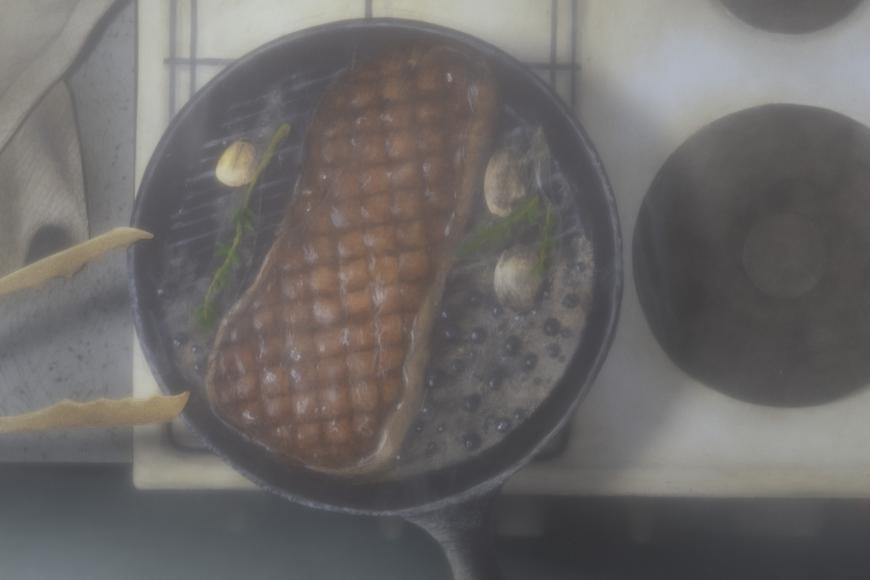
He and she are a good team. What was intended as a pleasant evening for two becomes overshadowed by an acrid cloud of roast fumes and ends civilized, but bloody: black humour, “well done”.
Coupledom has its own dynamics. Her professional obligations do not tick by the clock, his cooking and love are extraordinary, but, alas, precisely timed. This all too familiar incompatibility is condensed into murky, acrid roast fumes. What was intended as a pleasant evening for two ends civilized, but bloody: black humour, “well done”.
André Eckardt
Credits
Director
Špela Čadež
Script
Gregor Zorc
Cinematographer
Špela Čadež
Editor
Iva Kraljević
Producer
Tina Smrekar, Špela Čadež
Co-Producer
Emmanuel-Alain Raynal, Pierre Baussaron, Fabian Driehorst
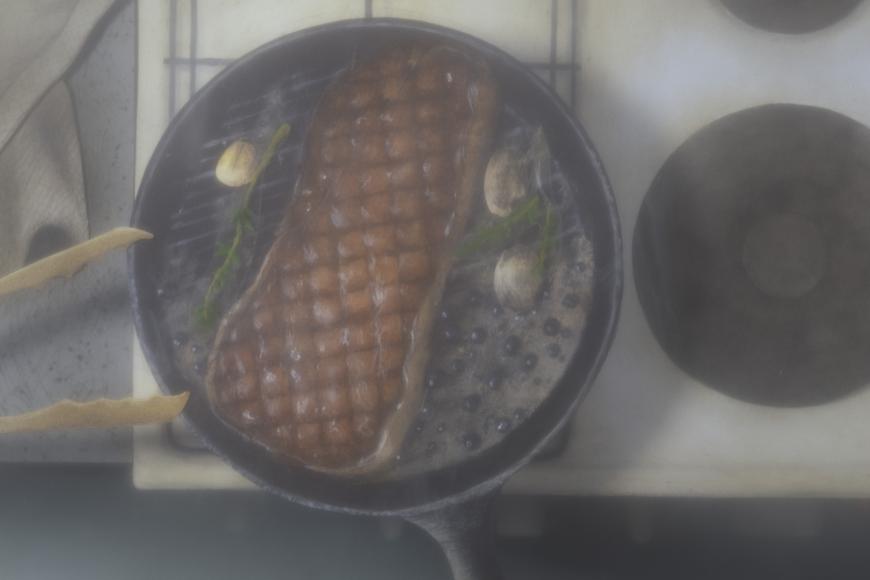
He and she are a good team. What was intended as a pleasant evening for two becomes overshadowed by an acrid cloud of roast fumes and ends civilized, but bloody. Black humour, “well done”.
Coupledom has its own dynamics. Her professional obligations do not tick by the clock, his cooking and love are extraordinary, but, alas, precisely timed. This all too familiar incompatibility is condensed into murky, acrid roast fumes and ends civilized, but bloody. Špela Čadež gradually slows down the pace, creating a space for the absurd goings-on to penetrate deeper and deeper. Black humour, “well done”.
André Eckardt
Credits
Director
Špela Čadež
Script
Gregor Zorc
Cinematographer
Špela Čadež
Editor
Iva Kraljevic
Producer
Tina Smrekar, Špela Čadež
Co-Producer
Emmanuel-Alain Raynal, Pierre Baussaron, Fabian Driehorst
A poetic, touching animated film about two young girls and their special relationship to the nearby river highlights the consequences of China’s one-child policy.
Competition for the Audience Award Short Film 2020
Animated Film
China,
France
2020
15 minutes
Chinese
Subtitles:
English
Lu and Wei live in a village in rural China. The young girls often go to the nearby river to play or fish with their fathers. The river has a special meaning for them because China’s one-child policy has led to some parents drowning their newborn daughters there. A poetic and touching animation in which Weijia Ma explores the consequences of this tragic chapter in the lives of many Chinese families.
Lina Dinkla
Credits
Director
Weijia Ma
Producer
Damien Megherbi, Justin Pechberty
Sound
Didier Falk
Score
Pablo Pico
Animation
Marion Chopin, Juanjuan Chen, Ziteng Qi, Kun Yu, Thilbault Dumoulin, Mathilde Poigniez, Jihua Zhu, Mengshi Fang, Joseph Roth, Emilie Pigeard, Le Van Ho, Yann Song, Alix Boiron Albrespy
Winner of:
Silver Dove (Competition for the Audience Award Short Film)
Mom, dad and their little daughter in a playlet set between kitchen and bathtub: an ordinary family rehearses after-work emergencies in an ingeniously sketched chamber play.
An ingeniously sketched chamber play about the nerve-racking hour before dinner: mother peels vegetables while father is trying to convince their little daughter to take a bath. The protagonists are pretty caricatures of their respective natures, even more so of the roles imposed upon them. An ordinary family – bound together for little good and much evil.
Ralph Eue
Credits
Director
Florence Henrard
Script
Florence Henrard
Editor
Huguette Van Volsem
Producer
L’École nationale supérieure des arts visuels de La Cambre (ENSAV)
A kitchen table with several objects on it stands still. But time provides movement. A candle burns down rapidly, a photo draped on the table comes to life. It shows a young woman making a cup of tea. Old hands approach the table to touch the letter lying there. Life on the photo stands still.
The gym locker room is the epitome of awkward moments in every teenager’s life. Every week the same questions comes up: Shower today, or can I do without?
The gym locker room is an unavoidable chapter in the life of teenagers and the epitome of awkward moments. Happy the person who has a relaxed relationship with their body. Teresia Fant’s documentary gives the floor to those who are forced to enter this place every week and ask themselves: Shower today, or can I do without?
Stranicy Moego Kinoalboma – Pages of My Film Album
V. Shendrik, V. Vajda, F. Krevnev
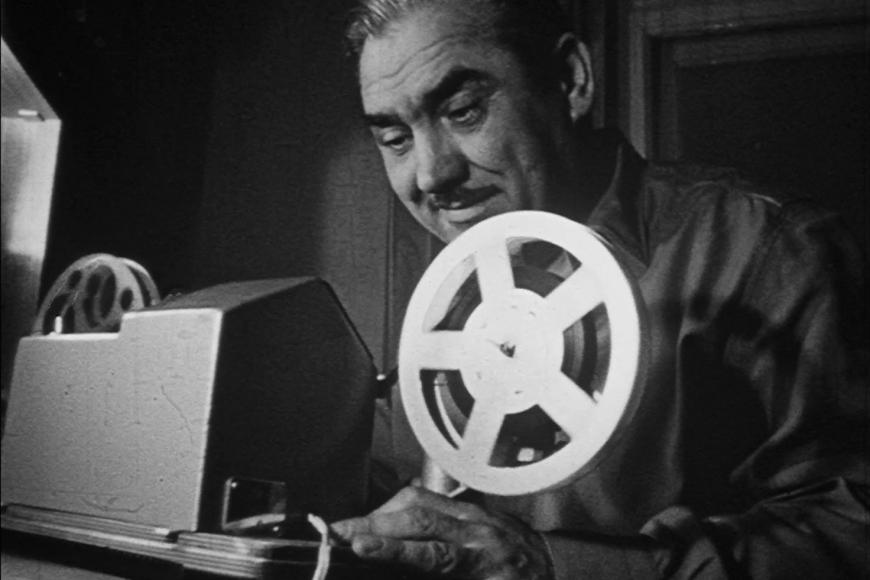
The big political guidelines – the “two camps” doctrine, historical duty, military alliance treaty obligations – emerge from the cine film collection of a Soviet citizen in Riga.
Watching his collection of cine films, a Soviet citizen and cineaste in Latvian Riga remembers his time as a soldier in the GDR. At the time, mutual military support within the Warsaw Pact guaranteed the defensive capabilities against attempted attacks from the imperialist west – always taking into account the lessons learned in World War Two.
“Stripsody” is based on a score of onomatopoetic elements and cartoon language quotes. The solo voice swings on a liana: past the “achoo” to the “boinnnggg”.
The musical piece “Stripsody” for solo voice was created in a collaboration between mezzo-soprano Cathy Berberian and comic book author and illustrator Roberto Zamarin. The score unites onomatopoetic elements, cartoon language and action sequences. Berberian’s magnificent voice takes up the dynamics of the images, swinging on a liana: past the “achoo” to the “boinnnggg”.




![Filmstill SSSR. 50 Let – 50 Years USSR [fragment]](https://www.dok-leipzig.de/sites/default/files/styles/stepped_teaser_/public/fiona/films/stills/155894af-d436-43aa-adaa-595a2c83d4f5.jpg?h=8cd0f387&itok=7HRK46Ve)







![Filmstill SSSR. 50 Let – 50 Years USSR [fragment]](https://www.dok-leipzig.de/sites/default/files/styles/film_stills_full_content_view/public/fiona/films/stills/155894af-d436-43aa-adaa-595a2c83d4f5.jpg?h=8cd0f387&itok=ERwnJ4cE)


