Topic
- Activism
- Animated Documentary
- Archival Footage
- Arts/Culture
- Coming of Age
- Digital Culture
- Eastern German
- Environment
- Experimental
- Family
- Gender
- History
- Human Rights
- Humour
- Labour/Economy
- LGBTQIA2S+
- Music
- Politics/Current Affairs
- Portrait/Biography
- Psyche/Mind
- Religion/Spirituality
- Science/Technology
- Social Issues
- Sports
- Underrepresented Communities
- War/Conflict
- Youth
Filmtype
Accessibility
Section
- Animation Night
- Animation Perspectives
- Audience Competition
- DEFA Matinee
- Doc Alliance
- DOK im Knast
- DOK Neuland
- Fokus Ost
- German Competition Documentary Film
- Hommage: Helena Třeštíková
- Hommage: Trollfilm
- International Competition Animated Film
- International Competition Documentary Film
- Kids DOK
- Matinee Saxon State Archive
- MDR Special Screening
- Opening Film
- Positions
- Retrospective
- Short Film Reel
- Young Eyes
Custom type
Topic
- Activism
- Animated Documentary
- Archival Footage
- Arts/Culture
- Coming of Age
- Digital Culture
- Eastern German
- Environment
- Experimental
- Family
- Gender
- History
- Human Rights
- Humour
- Labour/Economy
- LGBTQIA2S+
- Music
- Politics/Current Affairs
- Portrait/Biography
- Psyche/Mind
- Religion/Spirituality
- Science/Technology
- Social Issues
- Sports
- Underrepresented Communities
- War/Conflict
- Youth
Accessibility
Section
- Animation Night
- Animation Perspectives
- Audience Competition
- DEFA Matinee
- Doc Alliance
- DOK im Knast
- DOK Neuland
- Fokus Ost
- German Competition Documentary Film
- Hommage: Helena Třeštíková
- Hommage: Trollfilm
- International Competition Animated Film
- International Competition Documentary Film
- Kids DOK
- Matinee Saxon State Archive
- MDR Special Screening
- Opening Film
- Positions
- Retrospective
- Short Film Reel
- Young Eyes
VEB Edelpelz Schkeuditz [excerpt]
Disclaimer: This documentary film contains neither images of fur farms nor of the slaughter, skinning or killing of animals.
Meike Weimann
Screenings & Tickets
Credits
Contact
We Are Aliens
Marie Ketzscher
Contains depictions of mental health conditions, physical violence
Screenings & Tickets
Credits
Contact
sales@charades.eu
We Shall Return
The piece is accompanied by images taken in the West Bank by the photo collective Activestills, of which the two directors are members. There are also volunteers on site to offer emotional support and conversation.
Dana Melaver
Contains mentions of physical violence, violence against animals
Contains depictions of physical violence, violence against animals
Photosensitivity warning: Contains flashes of light that may trigger seizures for people with visual sensitivities.
Screenings & Tickets
This work is part of our exhibition
DOK Neuland: Landslide
27/10–1/11/2026
Free entry
Find seven works at Kohlrabizirkus.
Tue–Sun | 11:00–18:00
Wed | 12:00–20:00
Taking place at Kohlrabizirkus with one piece situated at the Leipzig Central Station ground-floor and a special performance at Heilandskirche/Westkreuz.
All about the DOK Neuland exhibition
Subject to the General Terms & Conditions of DOK Leipzig. Please be advised that due to a limited number of visitors allowed in the venues longer waiting times are to be expected. Thanks in advance for your patience.
Credits
Contact
What if Hildegard von Bingen was a Wellness Influencer
The two organs of the Heilandskirche have only been played by human hands, but that’s about the change. Trained on two edges of a musical spectrum – on music from the European Middle Ages, and contemporary electronic music – the AI players imagine hypothetical musical realities somewhere in between. As visitors enter the space, they begin to explore an invisible map, which conducts the AI players in one musical direction or another in search of a musical bridge between past and present. Ever-changing and unique, the piece is a singular audio experience felt with the entire body, and the body, in return, guides this musical composition. Played twice only, for three hours at a time, nothing is pre-determined nor repeated.
Dana Melaver
Screenings & Tickets
Credits
Contact
When the Sea Was Calm
Marie Ketzscher
Contains depictions of war scenes
Screenings & Tickets
Credits
Contact
katcharava@gmail.com
White Hole
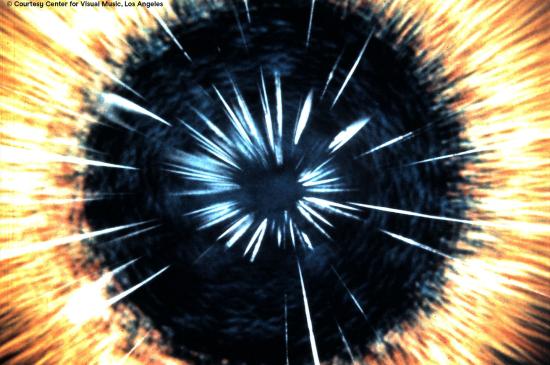
Where a black hole is characterised by a region of space in which objects become trapped and prevented from escaping, a white hole is a hypothetical region of spacetime which cannot be entered from the outside, but from within which things can emerge and be released. Such is the setting for this visually rich, hypnotically abstract journey into the universe's expansive voids. “White hole” was released towards the end of a period of exceptional creative experimentation for director Toshio Matsumoto, one of Japan’s most highly acclaimed and masterful experimental film and video makers. In contrast to his earlier celluloid work, “White hole” uses video synthesizers and heavy image processing to achieve a salient cinematic experience, reminiscent of Stanley Kubrick’s 'Stargate’ sequence from “2001: A Space Odyssey”, with similar overtones of psychedelic, and perhaps consciousness expanding cosmological exploration.
Ben Sassen
Photosensitivity warning: Contains flashes of light that may trigger seizures for people with visual sensitivities.
Screenings & Tickets
Credits
Contact
White Lies
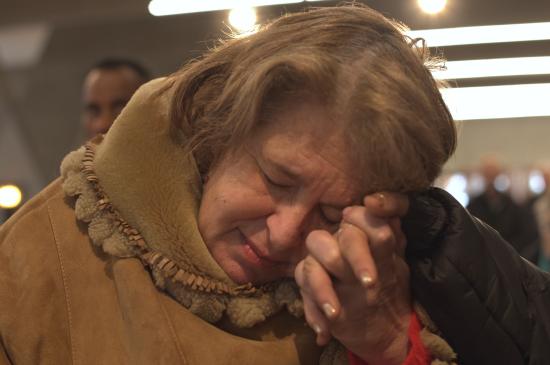
Alba Zari was born in Bangkok inside what was said to be “a hippie community” that her grandmother, Rosa, and her mother, Ivana, had joined. But she doesn’t recall much of her childhood. Longing for answers, Alba delves into the painful work of remembering: trying to understand her grandmother’s decision to join the Children of God sect, the far‑reaching consequences of her mother’s indoctrination, and her father’s identity. In conversations and everyday moments with her grandmother and mother, Alba learns more about the cult, the ‘Flirty Fishing’ practice, and widespread sexual and psychological abuse of its members, including children. The traces of pain are still tangible years later, showing in Alba’s tears rushing out before words, in the trembling of hands, and in her mother’s constant over-apologising. Alba “lives the questions”, hoping to find answers; however, as the journey unfurls, she realises it may not be about answers but about accepting absence as a constant presence, and not being defined by it. A film about family wounds, memory, and the resilience of ties that bind us.
Sevara Pan
Contains depictions of mental health conditions
Trailer
Screenings & Tickets
Credits
Contact
manuela@slingshotfilms.it
World
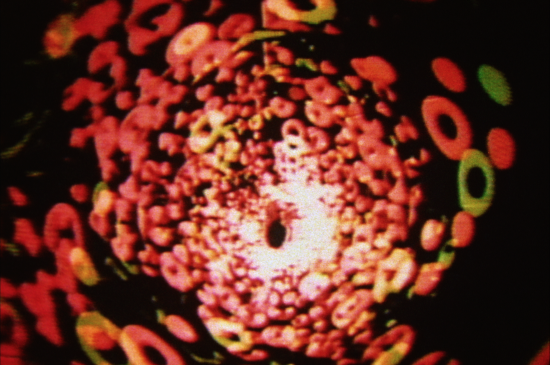
In fluid sequence, the birth of a world is depicted as a bioastronomical event. Nebulous, whirling gaseous spheres condense, becoming molten membranes, then a flashing planet. Descent into its erupting electronic forces, to the nucleus, finds the life-spark doubling and multiplying, ascending toward consciousness, into crystal symmetries. An awareness of the whole is focused into the beginning of superconsciousness. This film was preserved with the support of the National Film Preservation Foundation.
Pyramid Films
Photosensitivity warning: Contains flashes of light that may trigger seizures for people with visual sensitivities.
Screenings & Tickets
Credits
Contact
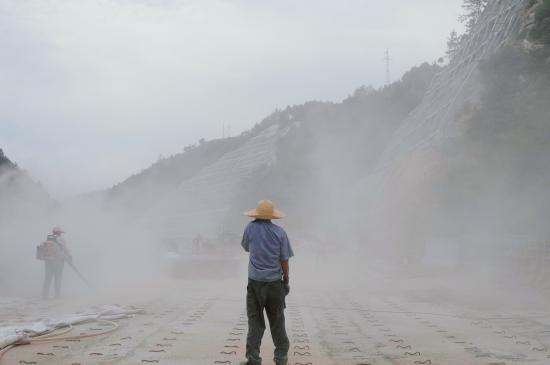
Xiangzidian Village: The Stage
James Lattimer
Trailer
Screenings & Tickets
Credits
Contact
husanshou@qq.com
Yawar Mallku
Jorge Sanjinés’ short film “Revolución” (1963) was one of the first Latin American films, beside the Cuban films, to be screened in Leipzig in 1964. With his documentary feature “Yawar Mallku” (Sangre de Condor), Sanjinés took a step towards a cinema that makes history. Told in flashbacks, the film is based on real events: US American development aid workers secretly sterilise indigenous women. The chief of a Quechua community discovers the crime; the village community takes revenge. He is finally shot down by the police and survives, badly injured. He is taken to town, but the rescue attempt fails: There is no money for a blood transfusion. The film challenges both “Yankee Imperialism” and the Bolivian class society. As a consequence of the initially banned public screening, the so-called Peace Corps had to leave the country. “Yawar Mallku” had its premiere in West Berlin as part of the 1970 Berlinale’s “Week of New Cinema: Latin America”. Thereafter the Friends of the German Cinematheque (today: Arsenal Filminstitut) showned Sanjinés’ film multiple times at the Arsenal Cinema over the years, including under the heading “Birth Control as Genocide” in the context of the First International Women’s Film Seminar in November 1973. It enjoyed the same esteem in the East: One of only three Latin American films found in the “Film-Blätter: Kurzmonographien zu klassischen Filmen" (Film Sheets: Brief Monographs on Classical films) of the GDR’s State Film Archive, “Das Blut des Condors” (The Blood of the Condor) is listed under No. 183.
Florian Wüst
Screenings & Tickets
Credits
Contact
pedro@ukamau.org
You Should Dream of Flying
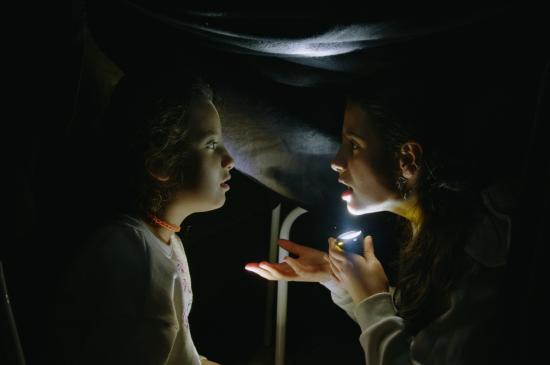
Playing hide and seek, reading out a school essay, taking a driving lesson. These scenes seem casual at first glance, but they turn out to be snapshots of life in exceptional circumstances. Only when the camera pulls back for a long shot does it reveal the refugee homes. The man behind the wheel drives briskly, explaining to the instructor that he obtained his driving license back home long ago. Two girls under a blanket tell each other stories of the time before they fled. What keeps this luminous round of scenes together is the hope of a return to normality.
Anke Leweke
Trailer
Screenings & Tickets
Credits
Contact
laura.staab@gmx.de